Branding vs Marketing: What Growing Businesses Need First
Branding vs Marketing: What Growing Businesses Need First
Written by
Soumil Jain
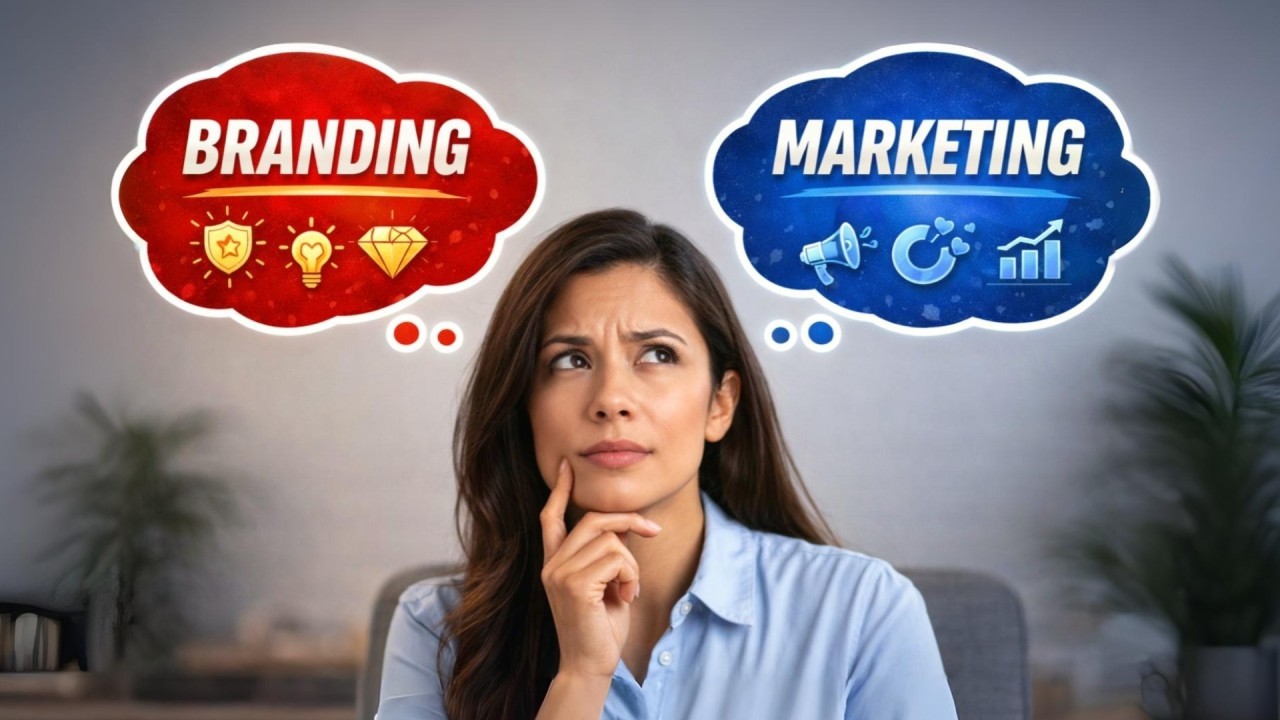
Branding is the identity of your business. It is how people feel when they hear your company name, see your logo, or interact with your content.
In this post:
In this post:
Section
In today’s competitive business world, many entrepreneurs confuse branding with marketing. While both are essential for business growth, they serve completely different purposes. One builds perception, while the other drives promotion. Understanding the difference can help businesses invest their time, money, and effort more effectively.
For growing businesses, the big question is: Should you focus on branding first or marketing first?
The answer lies in understanding how these two elements work together to create long-term success.
What Is Branding?
Branding is the identity of your business. It is how people feel when they hear your company name, see your logo, or interact with your content. Branding goes far beyond visuals - it includes your values, tone of voice, customer experience, mission, and overall perception in the market.
A strong brand creates trust, emotional connection, and recognition.
Think about some of the world’s biggest companies. People don’t buy from them only because of their products; they buy because of the emotions and trust attached to the brand.
Your brand answers questions like:
Who are you?
What do you stand for?
Why should customers trust you?
What makes you different?
Key Elements of Branding
Logo and visual identity
Brand colors and typography
Brand voice and messaging
Customer experience
Company values and mission
Emotional connection with customers
Branding creates familiarity. When done correctly, it makes your business memorable.
What Is Marketing?
Marketing is the process of promoting your products or services to attract customers and generate sales. It includes all the strategies and tactics businesses use to reach their audience.
If branding is the foundation, marketing is the engine that drives visibility and growth.
Marketing focuses on:
Generating leads
Increasing sales
Driving website traffic
Promoting offers and campaigns
Growing audience reach
Common Types of Marketing
Social media marketing
SEO (Search Engine Optimization)
Content marketing
Paid advertising
Email marketing
Influencer marketing
Video marketing
Marketing gets people’s attention, while branding gives them a reason to stay.
The Biggest Difference Between Branding and Marketing
A simple way to understand the difference is this:
Branding tells people who you are. Marketing tells people why they should buy from you.
Branding is long-term. Marketing is often short-term and campaign-focused.
Without branding, marketing can feel empty and forgettable. Without marketing, even the strongest brand may struggle to reach new customers.
The two work best together.
What Should Growing Businesses Focus on First?
For growing businesses, branding should come before aggressive marketing.
Many startups and small businesses rush into running ads or posting random content without first establishing a clear identity. This often leads to inconsistent messaging, weak customer trust, and poor conversion rates.
Imagine spending thousands on advertising while your website, social media presence, and messaging look unprofessional or unclear. Even if marketing brings traffic, customers may not trust the business enough to buy.
That’s why branding matters first.
Why Branding Should Come First
1. Branding Builds Trust
Customers buy from businesses they trust. A professional brand identity instantly creates credibility and confidence.
Consistent visuals, messaging, and communication make your business look reliable and established.
2. Branding Creates Recognition
People remember brands, not advertisements.
When your business has a unique personality and visual identity, customers are more likely to recognize and recall your brand in the future.
3. Branding Improves Marketing Performance
Good branding makes marketing more effective.
Ads perform better when customers already recognize the business behind them. Social media content gains stronger engagement when the brand has a consistent voice and identity.
Branding increases the return on marketing investment.
4. Branding Builds Emotional Connection
Modern customers connect emotionally with brands that align with their values and lifestyle.
People are not just buying products anymore—they are buying experiences, stories, and trust.
Strong branding creates loyalty.
When Marketing Becomes the Priority
Once your branding foundation is established, marketing becomes essential for scaling growth.
At this stage, businesses should focus on:
Increasing visibility
Reaching new audiences
Generating leads
Improving customer acquisition
Driving consistent revenue
Marketing helps businesses grow faster, but branding ensures the growth is sustainable.
The Most Successful Businesses Combine Both
The best businesses understand that branding and marketing are not competitors—they are partners.
Branding creates the message. Marketing distributes it.
For example:
Branding defines your tone and identity.
Marketing uses social media, SEO, and ads to spread that identity.
Without branding, marketing lacks meaning. Without marketing, branding lacks exposure.
Businesses that combine both strategically usually achieve stronger customer loyalty, better conversions, and long-term growth.
Common Mistakes Growing Businesses Make
Focusing Only on Marketing
Many businesses spend heavily on ads but ignore branding. This creates temporary visibility without long-term customer loyalty.
Inconsistent Brand Identity
Using different colors, messaging, or content styles across platforms confuses customers and weakens trust.
Copying Competitors
Trying to imitate successful brands often makes businesses look generic instead of unique.
Ignoring Customer Experience
Branding is not only visual—it includes how customers feel after interacting with your business.
Final Thoughts
So, what do growing businesses need first: branding or marketing?
The answer is clear - branding comes first, marketing comes next, and both must work together.
Branding builds trust, identity, and emotional connection. Marketing creates visibility, traffic, and sales. Businesses that focus only on marketing may grow quickly but struggle to build loyalty. Businesses that focus only on branding may look great but fail to reach enough customers.
Sustainable business growth happens when strong branding meets strategic marketing.
In the digital age, customers have endless choices. A business with clear branding and smart marketing stands out, builds trust faster, and creates lasting success.
In today’s competitive business world, many entrepreneurs confuse branding with marketing. While both are essential for business growth, they serve completely different purposes. One builds perception, while the other drives promotion. Understanding the difference can help businesses invest their time, money, and effort more effectively.
For growing businesses, the big question is: Should you focus on branding first or marketing first?
The answer lies in understanding how these two elements work together to create long-term success.
What Is Branding?
Branding is the identity of your business. It is how people feel when they hear your company name, see your logo, or interact with your content. Branding goes far beyond visuals - it includes your values, tone of voice, customer experience, mission, and overall perception in the market.
A strong brand creates trust, emotional connection, and recognition.
Think about some of the world’s biggest companies. People don’t buy from them only because of their products; they buy because of the emotions and trust attached to the brand.
Your brand answers questions like:
Who are you?
What do you stand for?
Why should customers trust you?
What makes you different?
Key Elements of Branding
Logo and visual identity
Brand colors and typography
Brand voice and messaging
Customer experience
Company values and mission
Emotional connection with customers
Branding creates familiarity. When done correctly, it makes your business memorable.
What Is Marketing?
Marketing is the process of promoting your products or services to attract customers and generate sales. It includes all the strategies and tactics businesses use to reach their audience.
If branding is the foundation, marketing is the engine that drives visibility and growth.
Marketing focuses on:
Generating leads
Increasing sales
Driving website traffic
Promoting offers and campaigns
Growing audience reach
Common Types of Marketing
Social media marketing
SEO (Search Engine Optimization)
Content marketing
Paid advertising
Email marketing
Influencer marketing
Video marketing
Marketing gets people’s attention, while branding gives them a reason to stay.
The Biggest Difference Between Branding and Marketing
A simple way to understand the difference is this:
Branding tells people who you are. Marketing tells people why they should buy from you.
Branding is long-term. Marketing is often short-term and campaign-focused.
Without branding, marketing can feel empty and forgettable. Without marketing, even the strongest brand may struggle to reach new customers.
The two work best together.
What Should Growing Businesses Focus on First?
For growing businesses, branding should come before aggressive marketing.
Many startups and small businesses rush into running ads or posting random content without first establishing a clear identity. This often leads to inconsistent messaging, weak customer trust, and poor conversion rates.
Imagine spending thousands on advertising while your website, social media presence, and messaging look unprofessional or unclear. Even if marketing brings traffic, customers may not trust the business enough to buy.
That’s why branding matters first.
Why Branding Should Come First
1. Branding Builds Trust
Customers buy from businesses they trust. A professional brand identity instantly creates credibility and confidence.
Consistent visuals, messaging, and communication make your business look reliable and established.
2. Branding Creates Recognition
People remember brands, not advertisements.
When your business has a unique personality and visual identity, customers are more likely to recognize and recall your brand in the future.
3. Branding Improves Marketing Performance
Good branding makes marketing more effective.
Ads perform better when customers already recognize the business behind them. Social media content gains stronger engagement when the brand has a consistent voice and identity.
Branding increases the return on marketing investment.
4. Branding Builds Emotional Connection
Modern customers connect emotionally with brands that align with their values and lifestyle.
People are not just buying products anymore—they are buying experiences, stories, and trust.
Strong branding creates loyalty.
When Marketing Becomes the Priority
Once your branding foundation is established, marketing becomes essential for scaling growth.
At this stage, businesses should focus on:
Increasing visibility
Reaching new audiences
Generating leads
Improving customer acquisition
Driving consistent revenue
Marketing helps businesses grow faster, but branding ensures the growth is sustainable.
The Most Successful Businesses Combine Both
The best businesses understand that branding and marketing are not competitors—they are partners.
Branding creates the message. Marketing distributes it.
For example:
Branding defines your tone and identity.
Marketing uses social media, SEO, and ads to spread that identity.
Without branding, marketing lacks meaning. Without marketing, branding lacks exposure.
Businesses that combine both strategically usually achieve stronger customer loyalty, better conversions, and long-term growth.
Common Mistakes Growing Businesses Make
Focusing Only on Marketing
Many businesses spend heavily on ads but ignore branding. This creates temporary visibility without long-term customer loyalty.
Inconsistent Brand Identity
Using different colors, messaging, or content styles across platforms confuses customers and weakens trust.
Copying Competitors
Trying to imitate successful brands often makes businesses look generic instead of unique.
Ignoring Customer Experience
Branding is not only visual—it includes how customers feel after interacting with your business.
Final Thoughts
So, what do growing businesses need first: branding or marketing?
The answer is clear - branding comes first, marketing comes next, and both must work together.
Branding builds trust, identity, and emotional connection. Marketing creates visibility, traffic, and sales. Businesses that focus only on marketing may grow quickly but struggle to build loyalty. Businesses that focus only on branding may look great but fail to reach enough customers.
Sustainable business growth happens when strong branding meets strategic marketing.
In the digital age, customers have endless choices. A business with clear branding and smart marketing stands out, builds trust faster, and creates lasting success.